Articles tagged with #industry

Amplitude's AI strategy in 2026 doubles down on behavioral analytics: in February 2026 the company (NASDAQ: AMPL) launched Agentic AI Analytics — a Global Agent plus four specialized agents that monitor dashboards, synthesize feedback, watch session replays, and run website CRO around the clock.

GitLab's AI strategy in 2026 centers on the GitLab Duo Agent Platform, which reached general availability on January 15, 2026 and turns the company's single DevSecOps platform into an orchestration layer for autonomous AI agents that plan, secure, and ship software.

Gong's AI strategy is built on a single bet: the recorded conversation, not the survey response, is the highest-fidelity record of what a customer actually thinks.

Rippling's AI strategy is a direct extension of its "compound startup" model: build many deeply integrated products in parallel, then let AI act across all of them from one shared data layer.

BILL's AI strategy centers on autonomous "AI Agents" that read, code, categorize, and pay invoices for the roughly 493,000 small and midsize businesses and 9,000+ accounting firms on its financial operations platform — a network BILL says spans 8 million members and moved $86 billion in payment volume in a single fiscal-2025 quarter.

Block's AI strategy in 2026 runs on a single conviction from CEO Jack Dorsey — "we're going to build this company with intelligence at the core of everything we do" — and it shows up in two product surfaces: Managerbot, a proactive Square AI agent that reached roughly one million businesses by April 2026, and Money…

Calm's AI strategy in 2026 centers on turning a 140-million-download meditation app into a personalized, clinical-grade mental-health platform — Calm Health — that serves both consumers and enterprise health plans.

Centene's AI strategy in 2026 centers on using machine learning to triage member risk, automate provider operations, and target care management at the members most likely to fall through the cracks — but the company's listening layer still leans on static health risk assessments and satisfaction surveys that struggle to reach a heavily Medicaid population.

Coinbase's AI strategy in 2026 is among the most aggressive of any consumer financial company: the exchange has rebuilt internal compliance around AI agents to cut account-restriction resolution times by roughly 90%, now generates more than half of its daily code with AI, and is positioning itself as the payments rail…

Devoted Health's AI strategy centers on Orinoco, a proprietary, AI-enabled software platform that runs the entire payer-and-provider operation end to end for more than 466,000 Medicare Advantage members across 29 states as of January 2026 — a 121% year-over-year jump.

Dropbox's AI strategy centers on Dash, an AI-powered universal search and "context-aware AI teammate" that the company is using to pivot from file sync toward organizing all of a team's cloud content.

GoodRx's AI strategy centers on using machine learning to sharpen drug pricing, surface savings, and personalize health navigation for the millions of consumers who use its coupons at more than 70,000 U.S. pharmacies.

Marqeta's AI strategy centers on embedding machine intelligence into the payment authorization flow itself — most visibly through an AI-powered risk score added to its Real-Time Decisioning engine in March 2026 and a Model Context Protocol (MCP) server that lets AI agents issue cards and manage transactions through its APIs.

Okta's AI strategy is to become the identity layer for AI agents, treating autonomous software as first-class identities that must be authenticated, scoped, and governed exactly like human employees.

PayPal's AI strategy in 2026 is a full-platform repositioning: under CEO Alex Chriss, the company is moving from a payments button to "the commerce platform powering the global economy," wiring AI into checkout, personalization, and a new layer of agentic commerce across a two-sided network of roughly 438 million active accounts.

Ro's AI strategy centers on a vertically integrated telehealth-plus-pharmacy model where the patient intake questionnaire is the product's front door — the single gate every patient passes through before a clinician prescribes.

Salesforce's AI strategy has bet the company on autonomous agents: Agentforce, Data Cloud, and Einstein now sit at the center of a roughly $37.9 billion business that grew 9% in fiscal 2025.

ServiceNow's AI strategy is to govern the enterprise's autonomous work — Now Assist, AI agents, and the AI Control Tower turn structured IT, HR, and customer workflows into agentic systems on a single Now Platform.

Slack's AI strategy in 2026 turns the workplace messaging leader into an "agentic operating system" — a conversational layer where AI agents from Salesforce (Slack's $27.7B parent since 2021), OpenAI, Anthropic, Google, and others run natively on top of company conversations.

Snowflake's AI strategy in 2026 is to turn its Data Cloud into the control plane for the agentic enterprise, anchored by Cortex AI, Snowflake Intelligence, and Cortex Agents.

Toast's AI strategy centers on ToastIQ, an intelligence layer launched in May 2025 that turns the operating system behind roughly 164,000 restaurant locations into a conversational, proactive co-pilot for time-starved operators.
Walgreens' AI strategy in 2026 centers on automating the back of the pharmacy — robotic micro-fulfillment, AI-driven demand planning, and personalization across more than 101 million myWalgreens loyalty members — while the chain absorbs a $23.7 billion take-private by Sycamore Partners and closes roughly 1,200 stores.

Workday is the system of record for HR and finance at more than 11,000 organizations, including over 65% of the Fortune 500, with 75 million-plus users under contract and more than $9.5 billion in fiscal 2026 revenue.

Zoom's AI strategy in 2026 is a deliberate reinvention: the company that defined video meetings rebranded from Zoom Video Communications to Zoom Communications in late 2024 and now calls itself an "AI-first work platform," anchored by AI Companion 3.0 and a growing fleet of agentic AI features.

Affirm's AI strategy is a tale of two customers. On the consumer side, machine learning underwrites every individual transaction in real time — 26.8 million active shoppers, 6.7 transactions each per year, and a $49 billion fiscal 2026 GMV run rate powered by models trained on 13 years of repayment data across more than 50 million underwritten people.

Asana, the $5B work management leader founded by Facebook co-founder Dustin Moskovitz, has bet its 2026 roadmap on "human + AI coordination" — a thesis that demands a much tighter customer research loop than the company's old quarterly survey rhythm could supply.

Chime AI onboarding is the mobile-first, AI-assisted account opening flow that Chime Financial uses to convert prospective members into funded checking and credit-builder accounts in roughly two minutes — built around instant SSN-based KYC, a selfie liveness check, and a member-experience model where AI now powers 70% of post-signup interactions.

ClickUp AI customer research is the most demanding feature-validation problem in horizontal SaaS because the company's "one app to replace them all" positioning has produced more product surface area than any direct competitor — docs, whiteboards, chat, time tracking, goals, AI Notetaker, Super Agents, and an…
Cooley LLP — the firm that represents more AI startups on equity financings than any other, per PitchBook — has built its AI stack around founders. Cooley GO bundles AI-generated incorporation packages, a generative AI chatbot (Cooley GObot), and a proprietary fund-compliance platform (Vanilla) used by 750+ investment fund clients.

Cravath, Swaine & Moore — the M&A powerhouse whose "Cravath System" of associate apprenticeship became the template every Wall Street firm copied — is now publishing a monthly AI developments newsletter, sending of counsel Scott B.

Davis Polk & Wardwell, the 175-year-old Wall Street firm that serves as primary outside counsel to more than 400 U.S.-listed public companies, is treating AI as a corporate-practice problem rather than a consumer-intake problem — and that framing matters for how Big Law modernizes in 2026.

Front built a $1.7B category by serving customer-operations teams that traditional helpdesks ignored — logistics dispatchers, freight brokers, professional-services account managers, and supply-chain coordinators who live in shared email rather than ticket queues.

Kirkland & Ellis became the first law firm in history to cross $10 billion in annual revenue in 2025 — gross revenue hit $10.56 billion (up 20% year over year), profit per equity partner climbed to $11.1 million, and the firm's deal portfolio nearly doubled from $425 billion to $829 billion, capturing 18% of global M&A deal value.

Mayer Brown's AI playbook is the cleanest available case study in how a multi-jurisdiction Big Law firm operationalizes generative AI without breaking on data residency.

Monday.com is a $7B+ Work OS that hit $1.23B in 2025 revenue with 250,000+ paying customers and 4,281 enterprise accounts at >$50K ARR. The company runs four productized verticals — monday work management, monday CRM (which crossed $100M ARR three years post-launch), monday dev, and monday service (GA in 2025…

Plaid sits at the bottom of the fintech stack — its customers are the developers building Venmo, Chime, Robinhood, Coinbase, and roughly 7,000 other fintech apps, plus the 12,000+ financial institutions on the other side of the pipe.

Robinhood AI customer research is the practice of using AI-powered conversational interviews to understand a retail trading base that has outgrown the product that hooked them.

Skadden, Arps, Slate, Meagher & Flom — the $4.1 billion-revenue Wall Street firm that ranked fourth globally in 2025 M&A league tables with $550 billion in deal value (Bloomberg Law) — is operationalizing generative AI faster than most of its peer set.
SoFi's "one financial app" thesis — 14.7 million members, 22.2 million products, and a 43% cross-buy rate as of Q1 2026 — depends entirely on knowing what each member wants next.

Sullivan & Cromwell ai adoption is the most-watched bellwether in BigLaw because S&C is the prototypical white-shoe firm — founded in 1879, profit-per-equity-partner above $6.7M, advisor of record to OpenAI on the Microsoft partnership, and historically described by legal-tech analysts as "conservative at best" in software adoption.

Wilson Sonsini Goodrich & Rosati (WSGR) is the most natural home for AI-powered conversational founder intake in BigLaw, and 2026 is the year that thesis becomes obvious.

Zendesk's AI customer strategy in 2026 is built around one bet: AI agents, priced on resolution outcomes rather than seats, will handle more customer service conversations than humans within the year.

Aetna is the only top-three U.S. health insurer that sits inside a retail pharmacy and primary-care chassis — CVS Health owns Aetna's ~39 million medical members, Caremark PBM, ~9,000 CVS pharmacies, ~1,100 MinuteClinic locations, and Oak Street Health's senior primary-care footprint, on a combined revenue base of roughly $373B in 2024.

Aflac is the largest supplemental insurance carrier in the United States, serving more than 50 million policyholders across the US and Japan and generating roughly $18.7 billion in 2024 revenue.

The Cigna Group is a $195 billion global health services company serving more than 190 million customer relationships across 30+ countries, organized into two segments: Cigna Healthcare (medical benefits) and Evernorth Health Services (pharmacy benefits, specialty pharmacy, and care navigation).

Coldwell Banker, founded in 1906 in post-earthquake San Francisco, is now the flagship residential brand of Anywhere Real Estate (NYSE: HOUS) and operates roughly 100,000 affiliated agents across 40+ countries.

Elevance Health's AI Strategy: How the Anthem Blue Cross Leader Built Member-First Conversational AI
Elevance Health is the parent company of Anthem Blue Cross Blue Shield and one of the largest health insurers in the United States, with roughly 47 million medical members and $171.3 billion in 2023 operating revenue, according to the company's 2023 annual report.

Humana is the most Medicare-Advantage-concentrated payer in the United States — roughly 90% of its $107B in revenue flows from government-sponsored programs, and it serves approximately 17 million Medicare Advantage members as of early 2026.

Kaiser Permanente is the most structurally advantaged payer in the US for conversational AI because it is also the provider. With 12.7 million members, roughly $110 billion in annual operating revenue, and a closed loop across Kaiser Foundation Health Plan, Kaiser Foundation Hospitals, and the Permanente Medical…

Keller Williams Realty is the largest real estate franchise in the world by agent count, with more than 180,000 agents across 1,100+ market centers, and its real estate AI strategy is built around one structural bet: own the agent relationship, not the consumer search funnel.

Opendoor is the iBuyer pioneer that turned residential real estate into an algorithmic pricing problem. Founded in 2014 by Eric Wu, Keith Rabois, Ian Wong, and JD Ross, the company generated roughly $5.2 billion in revenue in fiscal 2024 and has bought and resold more than 250,000 homes since launch.

Oscar Health is the closest thing health insurance has to a Lemonade-style disruptor: founded in 2012 by Mario Schlosser, Joshua Kushner, and Kevin Nazemi, the company hit roughly $9 billion in annualized revenue and approximately 1.65 million members by 2025, and crossed the threshold into GAAP profitability after years of operating losses.

Realtor.com — operated by Move, Inc., a subsidiary of News Corp, and the official site of the National Association of Realtors (NAR) — reaches roughly 100 million monthly unique users and is rebuilding its consumer experience around AI-driven matching, conversational lead capture, and listing intelligence.

Redfin is the most architecturally interesting brokerage to watch in real estate AI in 2026: a tech-forward, salaried-agent hybrid that draws roughly 50 million monthly visitors, generated approximately $1 billion in revenue, and was acquired by Rocket Companies for about $1.75 billion in an all-stock deal that closed in 2025.

RE/MAX Holdings is a Denver-headquartered residential real estate franchisor with ~140,000 agents in 110+ countries and territories, roughly $325M in 2024 revenue, and a brand instantly recognized by its red-white-and-blue hot air balloon.
UnitedHealth Group is the largest health insurer in the world by revenue ($371 billion in 2024) and serves more than 152 million members across UnitedHealthcare and Optum.

Zillow Group is the largest real estate portal in the United States, with approximately 207 million average monthly unique users and a Zestimate® that values more than 100 million homes.

AI patient intake for mental health practices replaces the 30-question PHQ-9 + GAD-7 + history packet with a conversational interview that adapts to what the patient says, in their own words, on their own phone, before they ever step into the room.

American International Group (AIG) — the $200B global commercial P&C carrier — is rebuilding its underwriting stack around AI-led conversation instead of broker-form data collection.
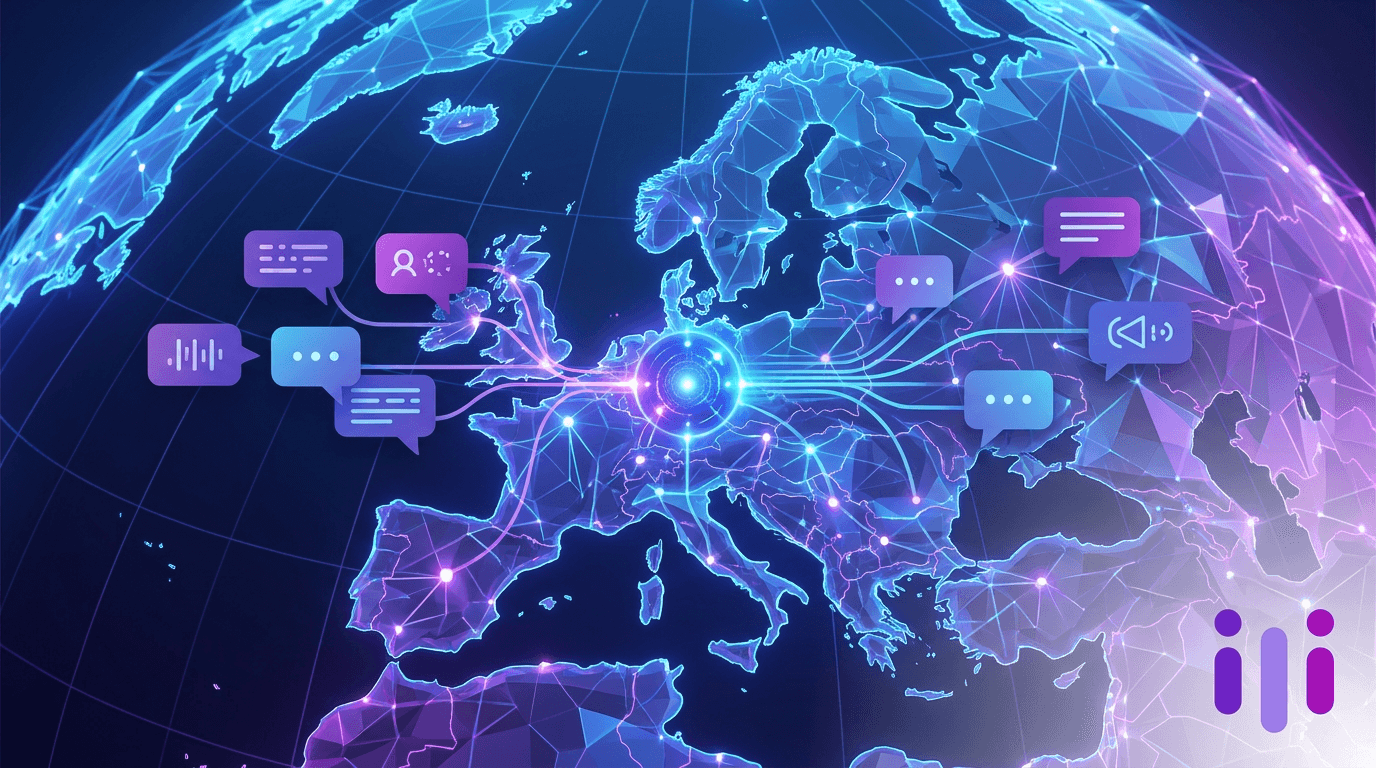
Allianz SE — Europe's largest insurer with roughly €150B in gross written premium, ~125 million customers, and operations in 70+ countries — has built one of the most ambitious conversational AI insurance customer-research programs in the global carrier market.
Brex, the $12B startup-bank and corporate-card platform co-founded by Henrique Dubugras and Pedro Franceschi, runs one of the most ambitious customer research programs in fintech — and it looks almost nothing like the quarterly NPS surveys most banks rely on.

Carta, the $7 billion equity-management platform that administers cap tables for more than 40,000 private companies and 2 million security holders, runs customer research across four wildly different personas — founders, employees, investors, and law firms — that each use a different vocabulary for the same transaction.

Cursor — the AI coding IDE built by Anysphere and led by CEO Michael Truell — runs one of the most aggressive AI customer research operating systems in developer tools, and it's a core reason the company crossed $300M in ARR and a reported $9B valuation in under 30 months.

Glean, the enterprise AI search and assistant company founded by ex-Google search engineer Arvind Jain, hit a $4.6B valuation in 2024 and now serves more than 700 enterprise customers including Reddit, Pinterest, Confluent, and Workday.

The Hartford Financial Services Group is using conversational AI to fix the single biggest problem in small commercial insurance: business owners cannot fill out a 40-field Business Owner Policy (BOP) application without an agent on the phone.

Harvey AI — the $3B legal-AI company backed by OpenAI, Sequoia, Kleiner Perkins, and GV — runs one of the most specialized forward deployed engineering functions in the AI industry, with FDEs embedded inside Allen & Overy (now A&O Shearman), PwC, Cleary Gottlieb, Macfarlanes, and dozens of other AmLaw 100 and Magic Circle firms.

Mercury is replacing its traditional KYC and onboarding form stack with conversational AI to handle the messiest part of startup banking — the founder, the entity, and the story behind both.

Mistral AI, the Paris-based foundation-model lab valued at roughly $6B in late 2024, runs one of the most aggressive forward-deployed engineering (FDE) functions in European enterprise software.

Perplexity AI, the $9 billion answer engine led by CEO Aravind Srinivas, runs customer research across three distinct surfaces — consumer search, Perplexity Pro power users, and Perplexity Enterprise — and increasingly treats every search session as a feedback signal.

Prudential Financial — the second-largest U.S. life insurer with roughly $50 billion in market capitalization and $1.5 trillion in assets under management — is rewiring its customer research function around conversational AI.

Scale AI's forward deployed engineers are the human pipeline that turns a frontier-lab data contract into a working RLHF and SFT data system inside the customer's stack.

Sierra AI, the conversational-agent company co-founded by former Salesforce co-CEO Bret Taylor and former Google VP Clay Bavor, raised at a $4.5B valuation in 2024 and is now estimated above $10B after a 2026 round, making it one of the most expensive private AI companies on earth.

Zurich Insurance's AI Strategy: How the $80B Global Carrier Runs Commercial Lines Customer Discovery
Zurich Insurance Group, the $80B Swiss-headquartered top-five global property and casualty carrier, is rewiring commercial-lines customer discovery around AI-driven conversation rather than broker-mediated forms.

Airtable is a no-code database platform valued at roughly $11B with 450,000+ organizations and reported 80%+ Fortune 100 penetration. Because Airtable touches HR, marketing, ops, product, finance, and engineering inside one account, its research challenge is unusual: understand many jobs-to-be-done across many departments without forcing any into a narrow schema.

Anthropic calls its forward-deployed engineering function "Applied AI Engineer" — same job as a Palantir or OpenAI FDE, different label that reflects Anthropic's safety-first, research-led culture.

Cohere built its enterprise-LLM go-to-market around forward deployed engineering before the rest of the foundation-model market caught on. Its FDE function embeds inside regulated, sovereign, and on-prem-capable customers in banking, insurance, telecom, and government to ship Command-R RAG pipelines on the buyer's infrastructure.

Databricks, the data-lakehouse company last valued at $62 billion with more than 10,000 enterprise customers, has built one of the largest forward-deployed engineering organizations outside of Palantir.
Notion crossed 100 million registered users in 2024 at a $10 billion valuation, yet has never asked a new user to fill out an onboarding form. Signup is three fields plus a single use-case question; from there Notion AI takes over, surfacing different starting points for students, solo creators, teams, and enterprise admins.

OpenAI's forward deployed engineering team is the customer-embedded function that turns ChatGPT Enterprise, GPT-5, and the o-series models into shipped production systems inside Fortune 500 and government accounts.

Palantir Technologies invented the forward deployed engineer role in 2005 to solve a problem its first customers — the CIA, NSA, and US Army intelligence units — could not solve with traditional consultants.

Stripe — valued at $95B in its 2025 tender offer and processing $1.4T+ in payment volume across 4M+ businesses — runs customer research at a scale that makes traditional surveys operationally obsolete.

Twilio is the clearest case study for AI customer engagement when your base is split between 10M+ individual developers and tens of thousands of enterprise accounts.

American Family Insurance is the #10 US property & casualty carrier with roughly $15.3 billion in direct written premiums and a mutual structure that lets it fund modernization without quarterly earnings pressure.

Anthropic, the maker of Claude, has become the canonical example of an AI lab that systematically researches its own enterprise buyers using AI — not just builds models.

Better.com (NASDAQ: BETR) is the publicly-traded digital mortgage lender that, after a turbulent SPAC debut, mass layoffs, and a CEO-on-Zoom scandal in 2021–2022, rebuilt its product around conversational AI — most visibly with Betsy, the company's AI mortgage assistant launched in 2024 and expanded in 2025.

Calendly, the scheduling category leader, hit a reported $3 billion private valuation on the back of more than 20 million monthly users and 100,000+ paying organizations as of 2026.

Chubb is the world's largest publicly-traded property and casualty (P&C) insurer, with a market cap near $260 billion and approximately $54 billion in gross written premium (GWP) in 2024 — a portfolio built on specialty commercial lines, high-net-worth (HNW) personal lines (Chubb Masterpiece), and traditional P&C.

Compass (NYSE: COMP) is a $4B-market-cap residential brokerage that has bet the company on the thesis that proprietary technology — not commission structure — will be the long-term moat in real estate.

DLA Piper — the global law firm with 90+ offices, more than 4,800 lawyers, and presence across roughly 36 jurisdictions — has become one of the most public biglaw AI adopters in 2026, with three named initiatives: a 2024 partnership with Iris (then "Iris.ai") for legal research, a firmwide Microsoft 365 Copilot…

DocuSign, a $13B publicly-traded agreement platform with more than 1.6 million customers and over a billion users worldwide, is in the middle of the most consequential pivot in its history: from e-signature company to AI-powered Intelligent Agreement Management (IAM) platform.

Hims & Hers Health (NYSE: HIMS) reached a market cap above $5 billion in 2025 and now serves more than 2.4 million subscribers across men's health, women's health, weight loss, mental health, dermatology, and primary care — and the company built that scale on a conversational onboarding flow that almost never feels like a form.

Klaviyo (NYSE: KVYO), the publicly-traded marketing automation platform that IPO'd in September 2023 at roughly a $9B valuation, serves more than 167,000 ecommerce brands and powered $63B+ in attributed customer revenue across the 2024 holiday quarter.

Maven Clinic is a $1.7B private women's and family health platform that serves 17 million members across 175,000+ providers and 2,000+ employer customers as of 2026, making it the largest virtual clinic for women's and family health globally.

Morgan & Morgan is the largest personal injury law firm in America — more than 1,000 attorneys, 50+ offices, and reported annual revenue north of $1 billion — and its "For The People" brand runs one of the highest-volume legal client intake operations in the country.

Rocket Mortgage is the #1 US retail mortgage lender, originating $101.2 billion in 2024 and roughly 8% of the US retail purchase market, and its 2026 AI playbook is built around two things: Rocket Logic, the proprietary AI underwriting and document layer, and a conversational borrower intake flow that the brand has…

Shopify, the publicly-traded ($SHOP, market cap north of $90B in 2026) commerce platform powering more than 4.6 million merchants across 175 countries, has rebuilt its product organization around continuous merchant research feeding an AI-first product surface.

Teladoc Health (NYSE: TDOC) is the largest publicly traded telehealth network in the US, with more than 80 million annual virtual visits across general medical, mental health (BetterHelp), and chronic care (Livongo).
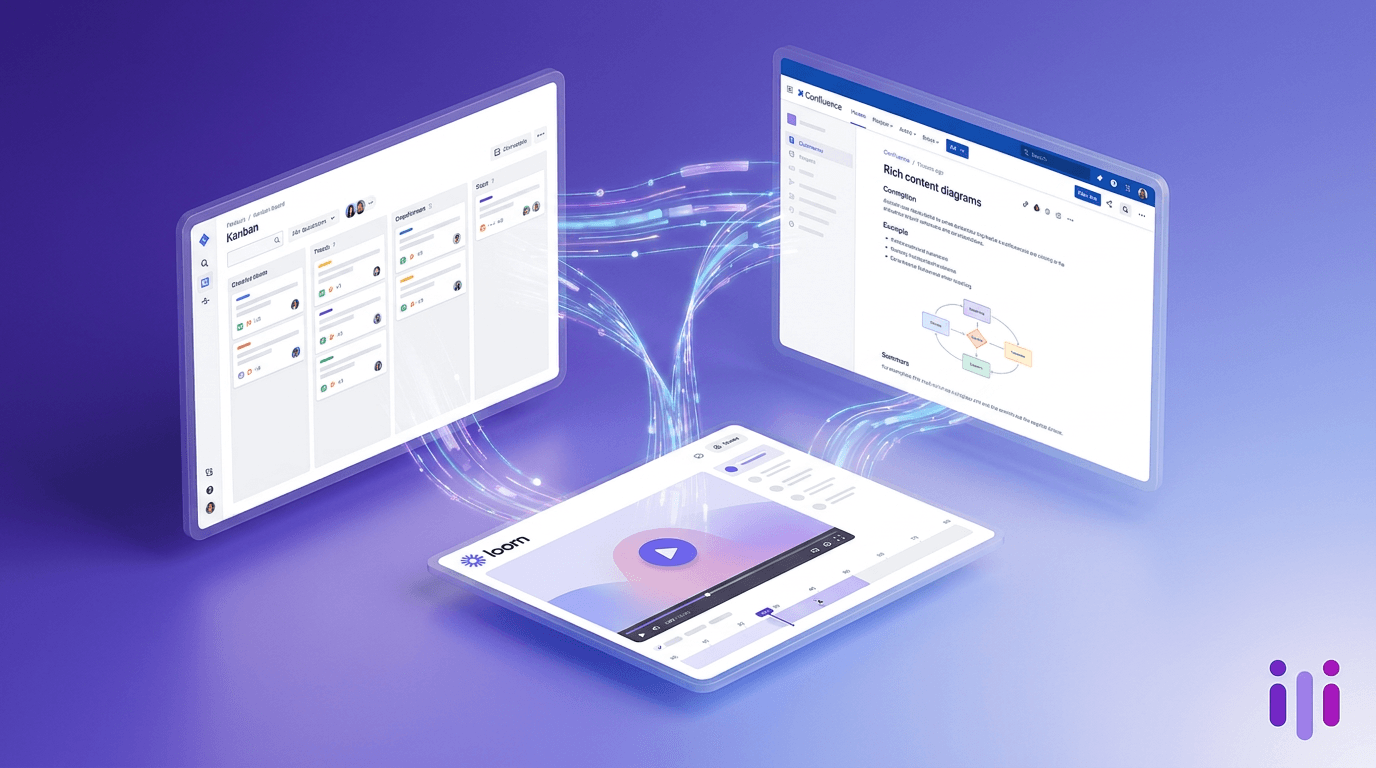
Inside Atlassian customer research in 2026: how Jira, Confluence, and Loom share a single discovery engine, what Rovo AI changed, and how teams prioritize across four product lines using AI customer interviews at scale.
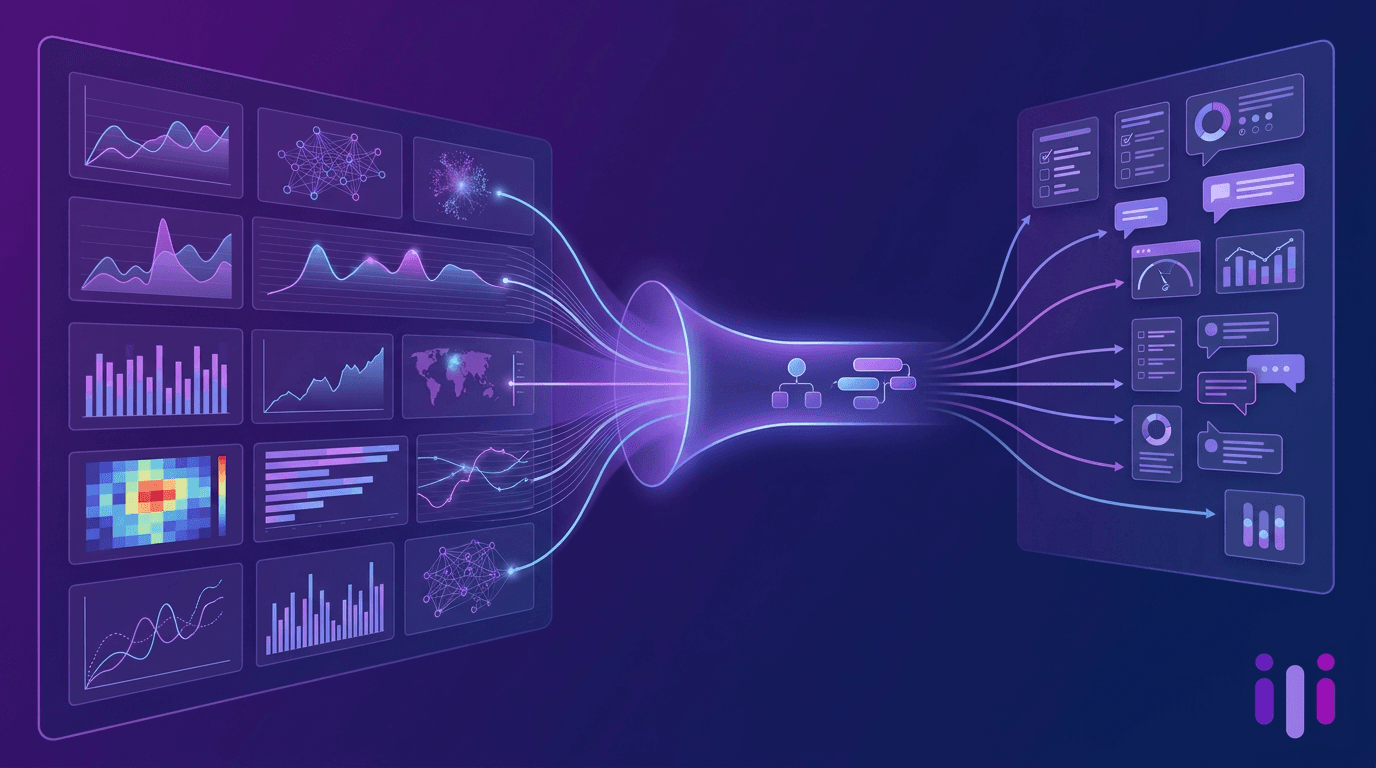
Datadog runs customer research as a hybrid operation: enterprise PMMs interview platform buyers while DevRel and product managers harvest signal from developers using the product daily. AI conversations now stitch those two streams together at scale.
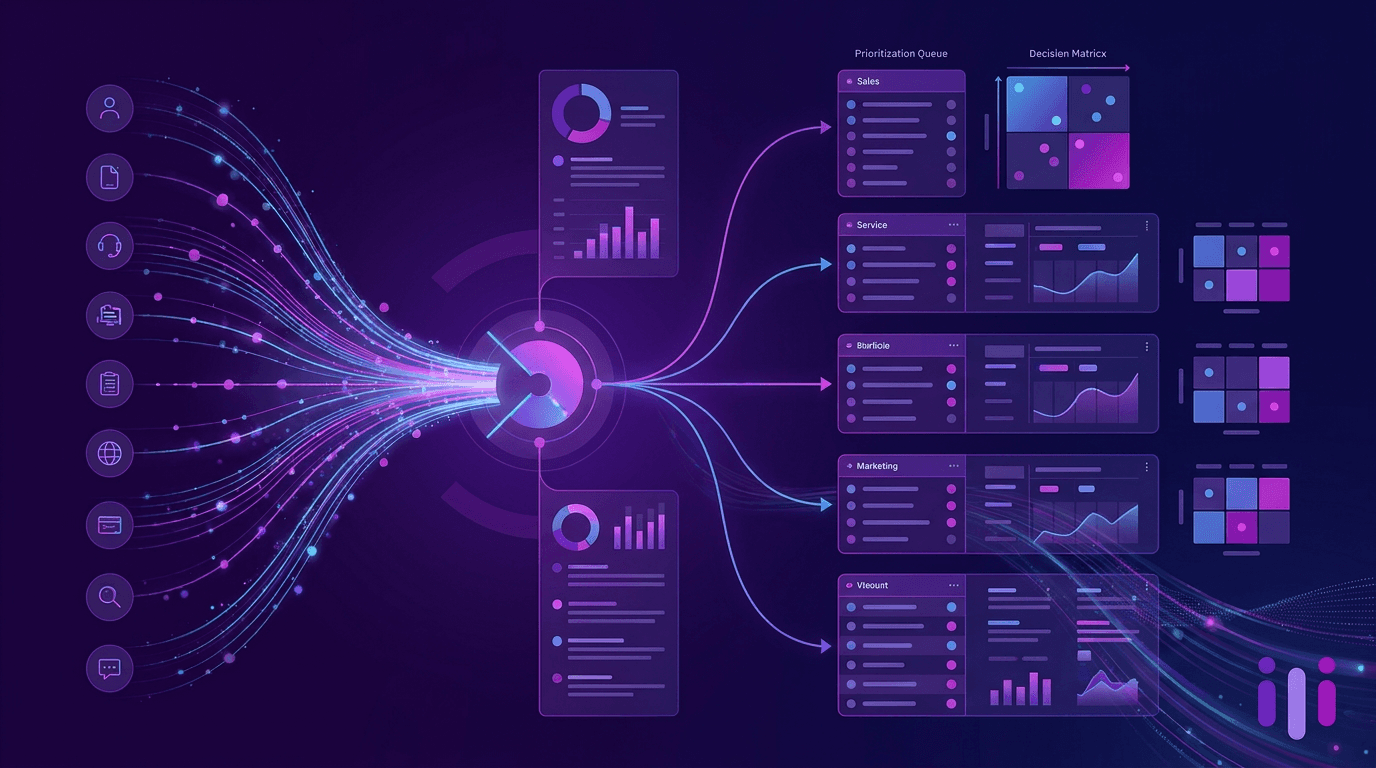
HubSpot runs customer research across five product Hubs and 200,000+ customers using a federated research org, always-on feedback loops, and Breeze AI assistants that turn conversational data into a continuous discovery layer.
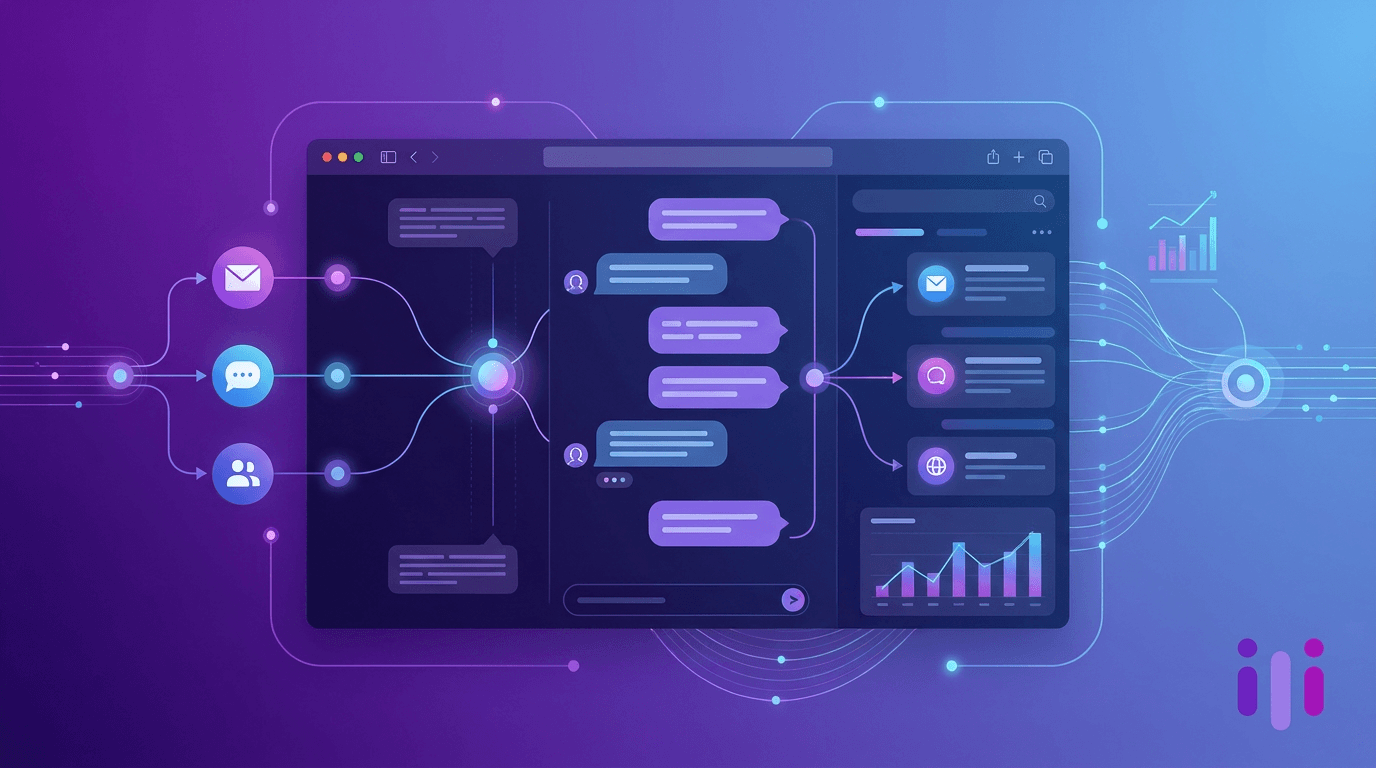
Intercom Fin is the AI customer service agent that resolves the majority of inbound conversations without a human. This case study covers what Fin actually does, what happened to forms, ticket volume, and human-rep workflow.
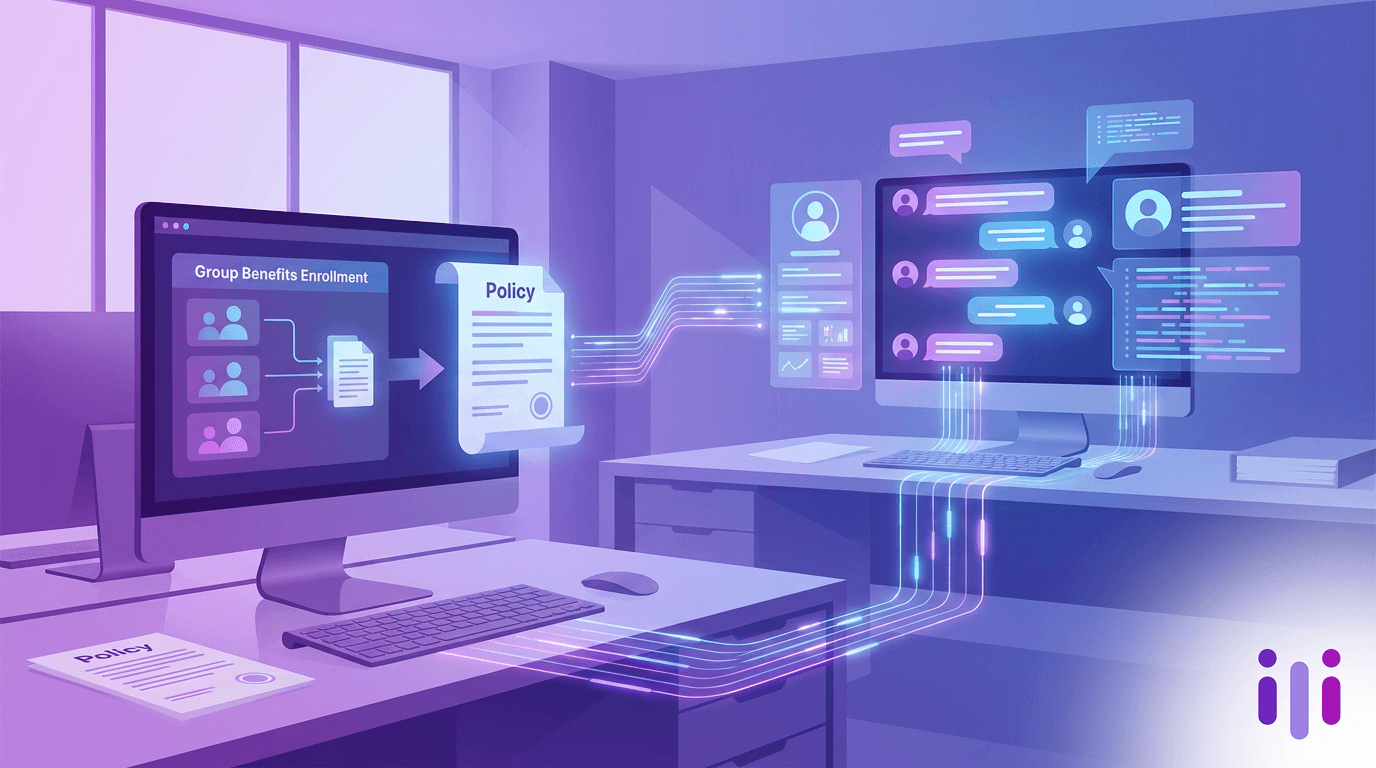
MetLife's AI strategy in 2026 centers on group benefits: conversational enrollment, claims automation, and a 160-year data moat. Here's what the incumbent is shipping, where peers beat them, and what it means for life insurance AI.

Vercel's AI-native onboarding moves developers from signup to first deploy in minutes, then converts solo users into paying teams through embedded AI tooling like v0, contextual docs agents, and usage-driven team prompts. Here is how their playbook works.

Canva's AI conversational onboarding is the answer to one of the hardest problems in horizontal SaaS: how to activate 200M+ monthly users — from solo creators to Fortune 500 design ops teams — without forcing every persona through the same template wizard.

Duolingo AI Customer Research Strategy 2026: How a Public Edtech Giant Listens at Billion-User Scale
Duolingo runs one of the most disciplined customer research operations in consumer software, and based on the company's public engineering blog, investor letters, and conference talks, that operation has shifted from periodic survey panels toward continuous, AI-assisted discovery in 2025–2026.

Figma reached 13 million monthly active users and a public-market debut in 2026 with a research function that never scaled linearly with headcount. Founder and CEO Dylan Field built the company on a tight feedback loop: the Figma Community, in-file comments, the public forum, Config (the annual user conference), and a…

Linear, the project management tool used by OpenAI, Vercel, Ramp, and thousands of other teams, has built a reputation for product taste that competitors like Jira and Asana spend tens of millions of marketing dollars trying to dent.

Loom — the async video messaging company acquired by Atlassian in 2023 for $975 million — is the rare SaaS that built its customer research the same way it built its product: async first.

Miro runs customer research on a tool that is, itself, a research tool — a recursion that forces the company to be unusually deliberate about how it learns from its 90M+ registered users.

Ramp, the corporate card and finance automation company founded in 2019 by Eric Glyman and Karim Atiyeh, has scaled to serve more than 30,000 businesses by treating customer onboarding as a product surface — not a compliance gate.

Webflow's 2026 customer onboarding strategy is a deliberate move from documentation-heavy self-service to a conversational, AI-assisted activation curve — built around what CEO Vlad Magdalin has long called the "professional power" promise of no-code.

Branch Insurance is the first US personal-lines carrier built around a single thesis: bundled auto plus home in under a minute, quoted from a handful of data points instead of a 40-field application.
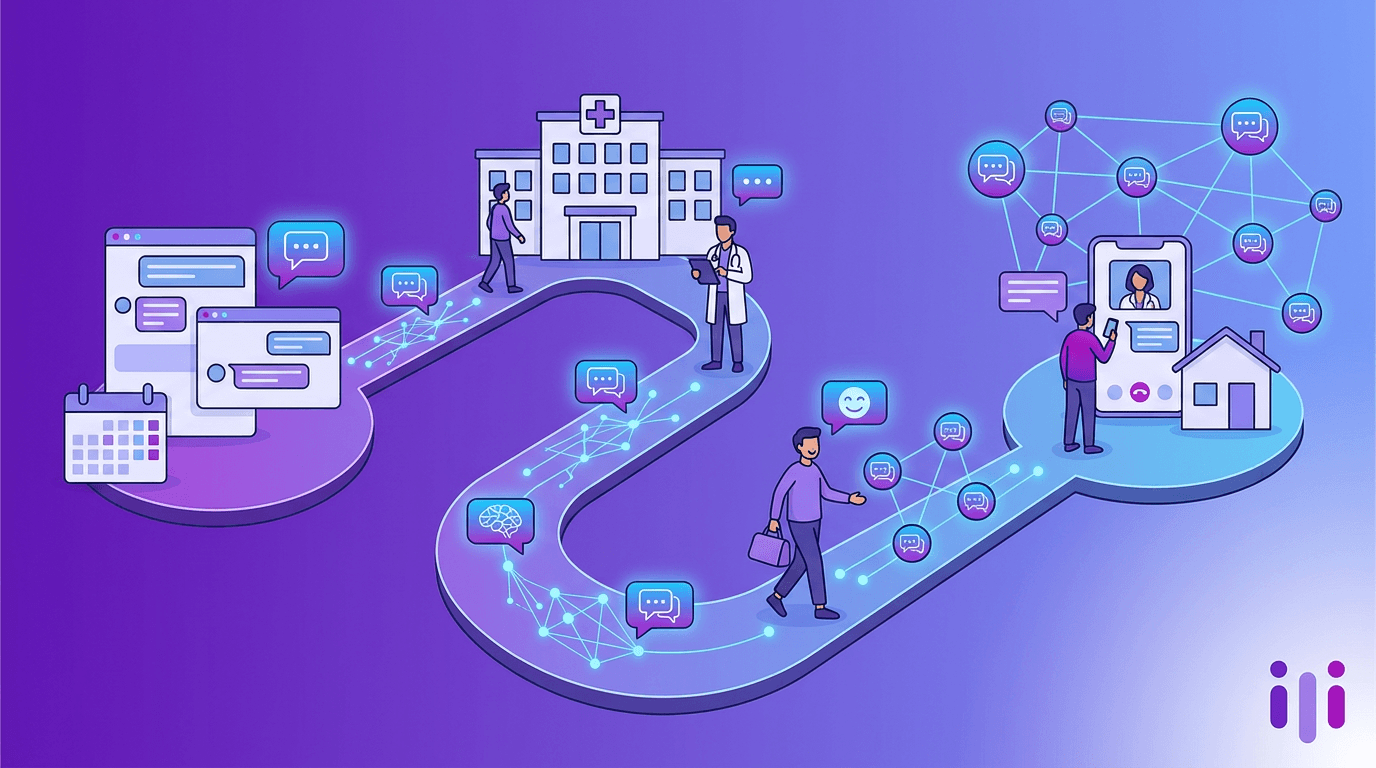
Cleveland Clinic has spent more than a decade building one of the most public AI playbooks in US healthcare, anchored by an early IBM Watson partnership in 2014, a deep Epic EHR backbone, a multi-year generative AI pact with Microsoft and G42 announced in 2023, and a quantum-and-AI biomedical research alliance with…

Cover Genius is the Sydney-headquartered insurtech that operates XCover, the largest embedded-insurance distribution platform in the world, underwriting protection for partners including Booking.com, Intuit, eBay, Ryanair, Uber, and SeatGeek.

Farmers Insurance Group is the largest captive-agent personal-lines carrier in the United States, writing roughly $25 billion in annual premium across more than 10 million households through a network of about 48,000 exclusive and independent agents.

Klarna's OpenAI-powered customer service assistant, launched globally in February 2024, handled 2.3 million conversations in its first month — work the company said was equivalent to roughly 700 full-time agents.

Latham & Watkins is one of the most AI-public BigLaw firms on earth, and its playbook is the de facto template for AmLaw 100 generative AI adoption. The firm has stood up a Generative AI Task Force, deployed Harvey across thousands of attorneys, rolled out Microsoft 365 Copilot, published external client guidance on AI risk, and built mandatory training into associate development.
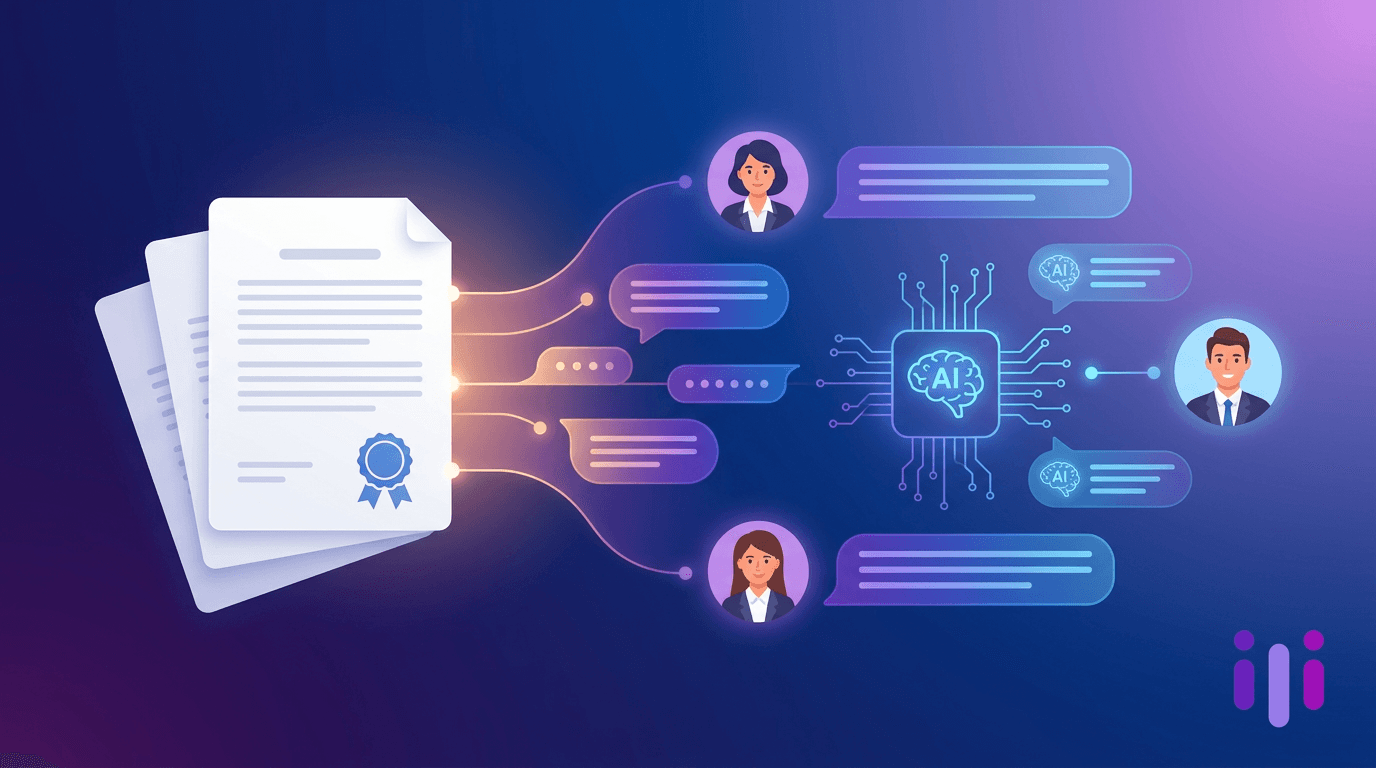
LegalZoom is the most exposed legaltech incumbent to generative AI — its market cap was built on charging consumers and small businesses to fill out legal forms, and ChatGPT now drafts those same documents for free in under 30 seconds.

Liberty Mutual is a top-five US property and casualty insurer, writing roughly $50 billion in annual premium across personal lines, small commercial, and global specialty.

Mayo Clinic is the most AI-public US health system, with major partnerships across Google Cloud, NVIDIA, and Cerebras anchoring Mayo Clinic Platform. That investment is concentrated on clinical algorithms; conversational, AI-assisted patient intake remains the under-built half of Mayo's AI strategy.

Nationwide's AI customer experience strategy is built around a structural advantage no monoline carrier can match: a single member relationship that spans auto, home, life, pet, and financial services.
Notion's customer research practice is the clearest case study in modern SaaS for what happens when a CEO refuses to outsource learning about users. Co-founder Ivan Zhao personally interviewed early users for years, and that habit cascaded into a product-development culture where talking to customers is treated as the…
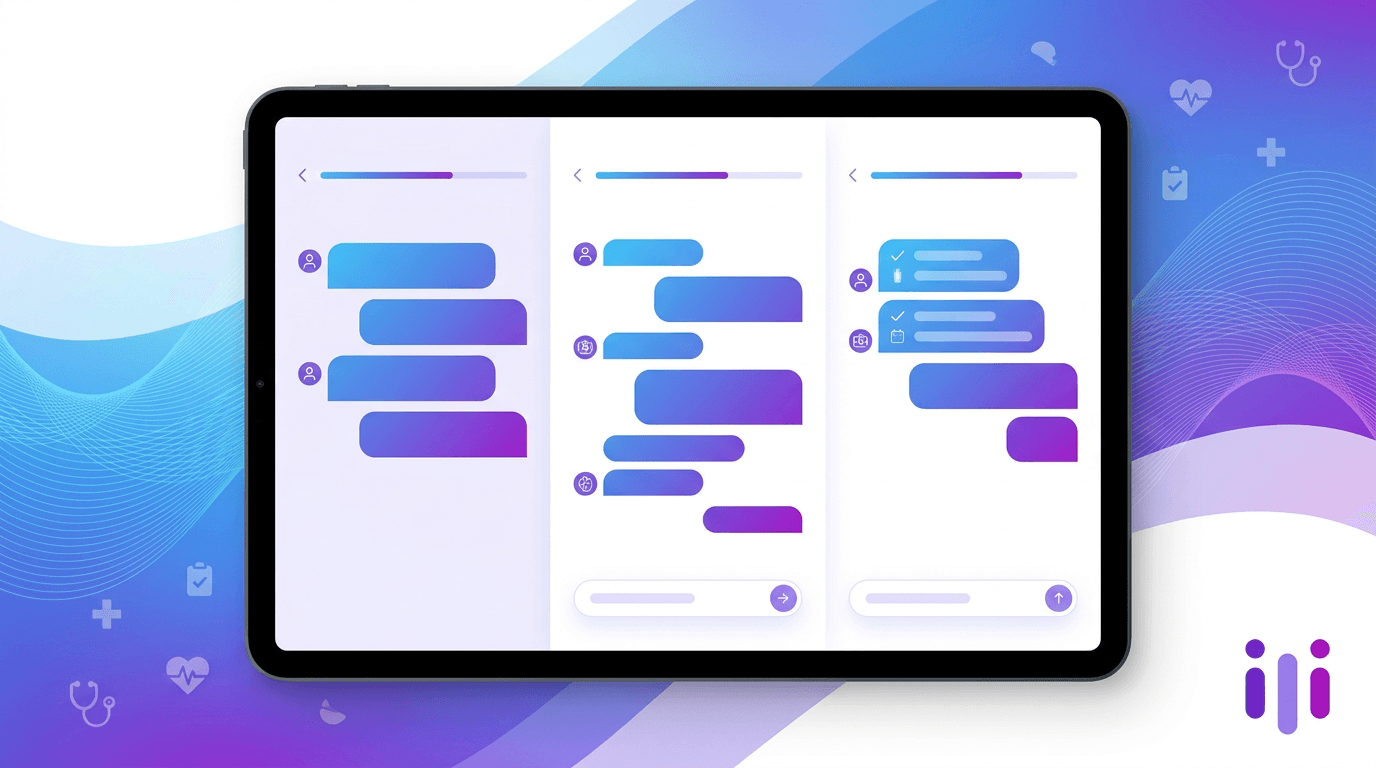
One Medical is Amazon's bet that primary care should feel like a consumer-tech product rather than a healthcare bureaucracy, and the experience to beat in US ambulatory care now sits inside Amazon's Prime ecosystem.
Pie Insurance is the clearest proof that AI-first underwriting works in a vertical legacy carriers wrote off — small business workers' compensation. Founded in 2017, Pie uses a tech-driven model to quote, bind, and service workers' comp policies, raising more than $615 million in equity and reaching a $2 billion-plus valuation at its 2022 Series D (press release).

Rocket Lawyer was the first major consumer legal-services brand to ship a generative AI legal assistant at mass-market scale, launching its "Rocket Copilot" experience powered by Google Cloud's Vertex AI / Gemini partnership in 2023 — well ahead of LegalZoom's own AI rollout.

Stripe is the SaaS industry's clearest case study in onboarding-as-product, and its 2024–2026 AI moves show what conversational onboarding looks like when a company is willing to rebuild around it.

Travelers Insurance AI strategy is overwhelmingly weighted toward underwriting and claims — not the consumer chatbots that dominate Geico, Lemonade, and Progressive headlines.

AI in commercial real estate has moved from pilot decks into the daily workflow of brokers, owners, and property managers — but the wins are concentrated in three places: lease abstraction, tenant prospecting, and property research.

AI in higher education in 2026 has moved past the "ChatGPT in the classroom" debate into three workflows where it's measurably working: admissions intake (Georgia State's Pounce chatbot cut summer melt from 19% to 9%), student success conversations (Harvard's CS50 Duck and ASU's ChatGPT Edu rollout to 100,000+ users), and alumni feedback at scale.

Allstate's AI claims strategy is one of the longest-running, most-public bets on automation in U.S. P&C insurance. QuickFoto Claim, launched in 2014 as the carrier's photo-based damage estimation app, now handles roughly half of Allstate's driveable-vehicle auto claims and has helped compress the estimating cycle from…
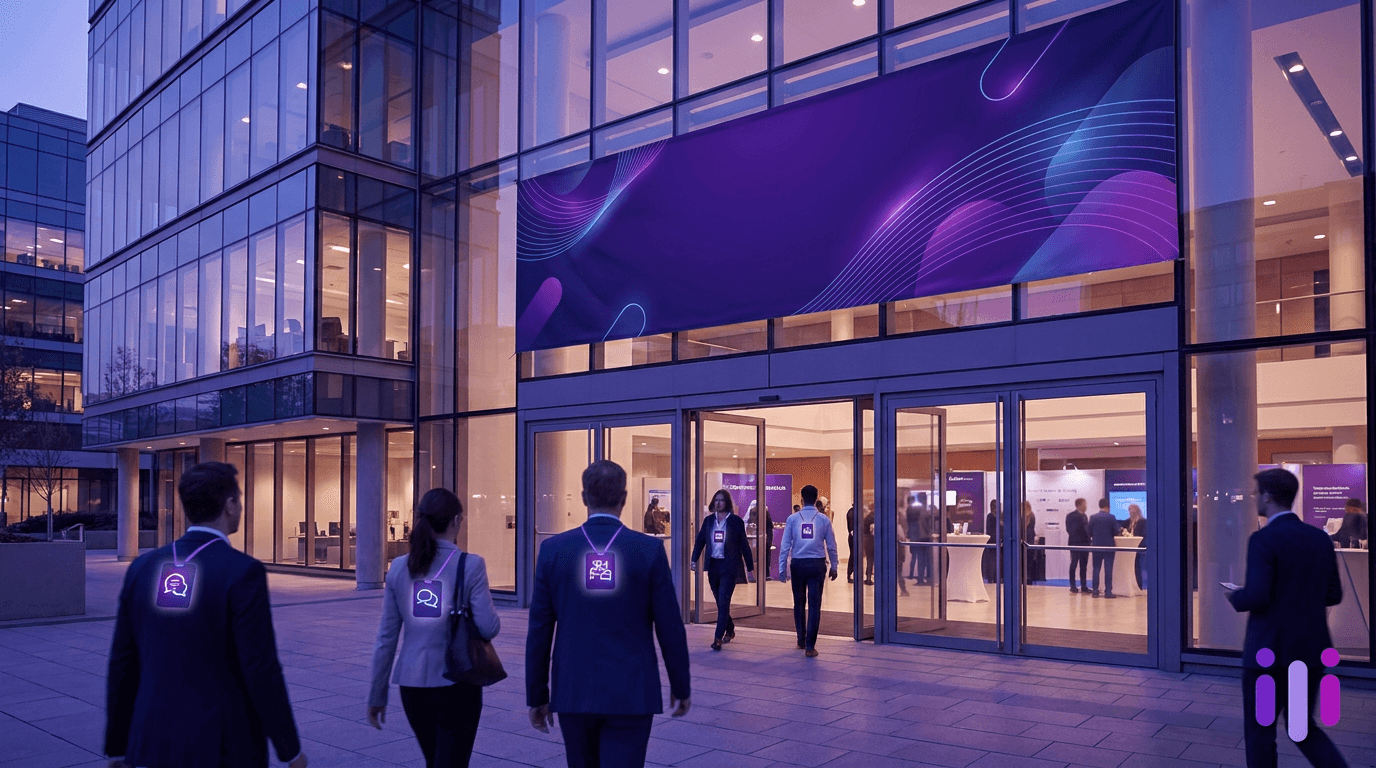
Corporate Event Registration in 2026: Internal Events, B2B Conferences, and the End of the Form Wall
Corporate event registration in 2026 is splitting into three distinct workflows — internal events (sales kickoffs, training, all-hands), B2B conferences (industry summits, user conferences, exhibitions), and field marketing events (executive dinners, regional roadshows) — and the generic ticketing form is failing all three.

Event registration software for nonprofits in 2026 is no longer a ticketing utility — it is the front door of your donor pipeline. The best platforms blend three things consumer-grade tools cannot: native CRM sync to Salesforce NPSP, Bloomerang, or Neon CRM so every registrant becomes a constituent record…
Geico's AI chatbot strategy in 2026 centers on Kate, a virtual assistant inside the Geico Mobile app that answers policy, billing, and document questions through natural-language conversation instead of forms.

Hippo Insurance pioneered the smart-home-as-insurance-policy model, bundling Notion, Roost, SimpliSafe, ADT, and Kangaroo IoT devices into homeowners coverage to detect water leaks, freeze events, and intrusions before they become claims.

Next Insurance — rebranded as ERGO NEXT Insurance in early 2026 after its integration with Munich Re — built one of the most successful AI-first SMB insurance carriers in the U.S. by replacing the broker-and-paper-application model with a digital quoting flow that prices policies in minutes.

Progressive's Snapshot is the most studied telematics program in U.S. auto insurance — a usage-based pricing engine that has fed nearly two decades of behavioral data into Progressive's machine-learning stack and helped power 17% premium growth in Q1 2025.

Root Insurance built the most behavior-native auto underwriting stack in the U.S. by replacing credit scores and demographic proxies with telematics: a 30-day in-app test drive that scores 270+ driving variables across 36 billion miles of collected data, with roughly 73% of pricing weight on actual driving behavior.

State Farm — the largest US property and casualty insurer with more than 96 million policies and accounts — is modernizing its customer experience around an explicit "augment, don't replace" thesis for its 19,200+ agent offices and 62,000+ employees.
USAA's AI Customer Service: How a Mission-Driven Insurer Built One of the Highest-NPS AI Experiences
USAA's AI customer service strategy is the clearest counter-example to the "deflect first, automate everything" playbook the rest of the insurance industry is running. The San Antonio-based insurer has won J.D.

Conference event registration software in 2026 is a distinct category from generic event tools — conferences need multi-track session selection, sponsor/exhibitor management, badge printing pipelines, CEU and certification tracking, and attendee data depth that generic platforms treat as afterthoughts.

Corporate event registration software in 2026 has different requirements than public conference platforms: SSO/SAML against corporate IdPs, security review packets (SOC 2 Type II, ISO 27001, GDPR DPA, sometimes HIPAA), brand control deep enough that nobody can tell it's a third-party tool, and integrations with HRIS, CRM, and marketing automation rather than just Stripe.

Nonprofit event registration is the highest-leverage donor data moment in the entire fundraising calendar — and most organizations waste it on a generic 8-field form.
AI in customer communications in the insurance industry is no longer experimental in 2026 — it is shipped at scale for a narrow set of workflows and stalled at pilot for almost everything else.
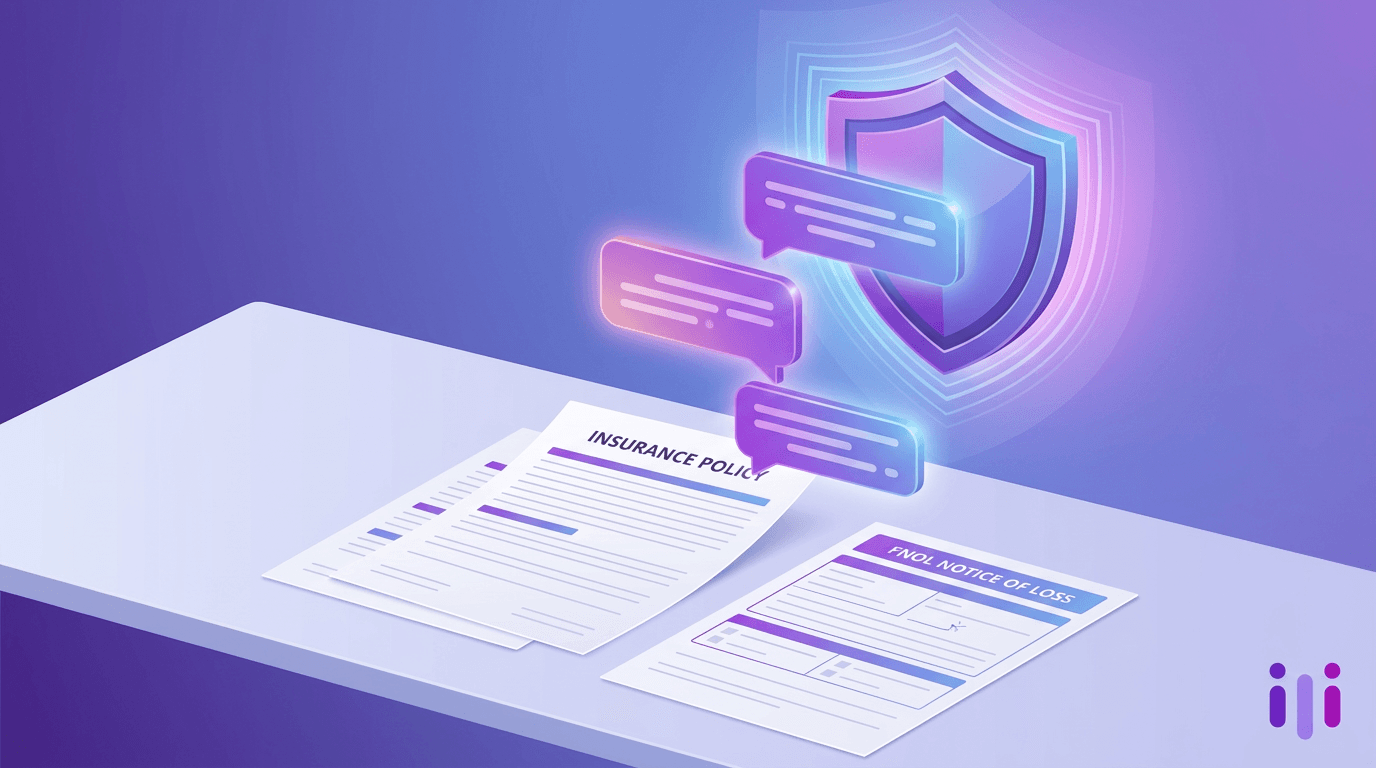
AI in customer communications for insurers is no longer a pilot-stage experiment — by 2026, most U.S. carriers, MGAs, and brokerages have at least one AI-driven channel in production for First Notice of Loss (FNOL) intake, policy and coverage Q&A, renewals outreach, or claims status updates.

AI technology for insurance policy inquiries is the single most-deployed AI use case in U.S. property and casualty carriers in 2026, ahead of underwriting copilots and claims triage.
Law firms lose 65-70% of PNCs at the intake stage. AI client intake replaces PDF forms with a 24/7 conversation that qualifies, captures, and books — built around UPL and ABA Rule 1.6 guardrails.

Most insurance agencies misallocate their AI budget. The leverage is at the bookends — intake (stage 1) and renewal (stage 5), not submission and bind. A 5-stage playbook.

Lead volume is up, conversion is down. The leverage in real estate AI is at lead capture, buyer discovery, and listing prep — not another chatbot. A practical playbook.
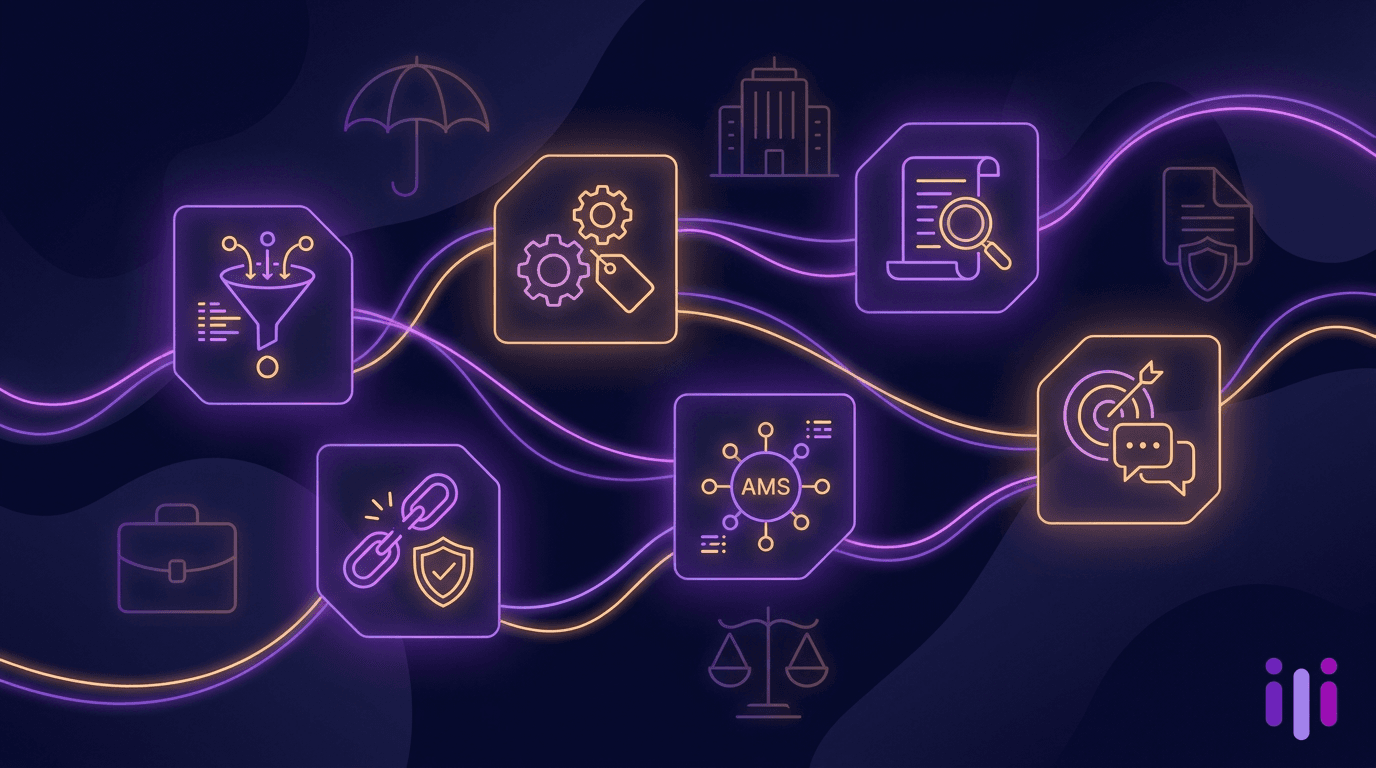
Most insurance AI was built for carriers, not brokers. A practical roundup of broker-side AI tools across 6 categories — intake, quoting, policy review, claims, AMS, CRM.

Why real estate teams are replacing contact forms with AI-powered conversations that capture buyer intent, timeline, and budget before an agent picks up the phone.

How healthcare practices are replacing paper intake forms with AI-powered conversations that adapt to each patient, improving data quality and reducing wait times.

Why the best home services contractors are replacing contact forms with AI-powered conversational intake that qualifies leads in real-time and routes to the right crew.

Why nonprofit donor satisfaction surveys miss what matters and how AI-powered conversations uncover the motivations, concerns, and loyalty signals that drive retention.